

5 Warning Signs of an Achilles Tendon Injury You Shouldn’t Ignore
A slight pull at the back of your ankle doesn’t seem like much at first. Maybe it started after a long walk in Downtown Dubai. Maybe it happened during a gym session or while playing padel. You stretch it out and keep going.
That’s how many cases of Achilles tendon injury begin.
The Achilles tendon is the thick band of tissue connecting your calf muscles to your heel bone. It handles a surprising amount of force every time you walk, run, or jump. When it’s strained or damaged, the signs are often subtle in the beginning. Ignore them, and a small issue can turn into a serious Achilles tendon tear or even a complete Achilles tendon rupture.
Here are five warning signs you shouldn’t brush aside.
1. Persistent Pain at the Back of the Ankle
This is the most common early symptom.
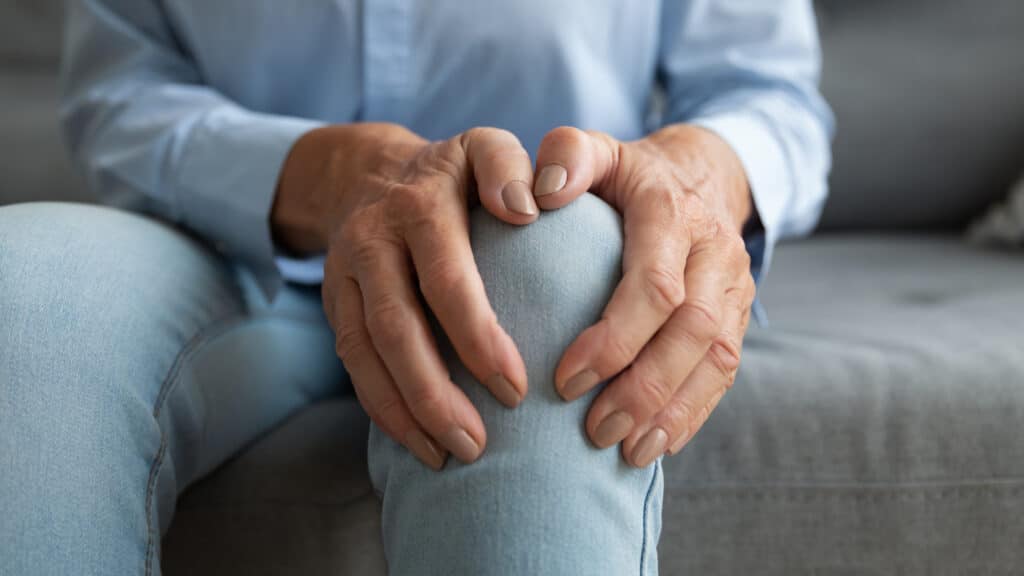
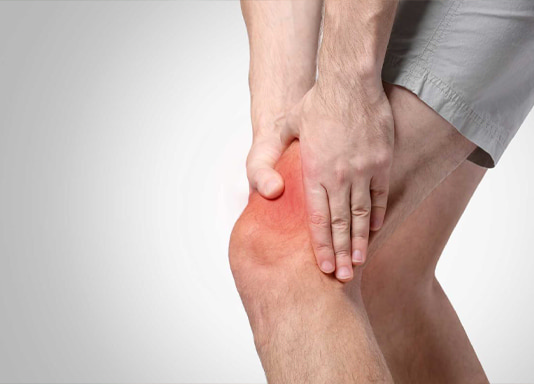
Achilles tendon pain usually starts as a dull ache just above the heel. You may notice it more in the morning or after sitting for a while. The first few steps feel tight or stiff. As you move, it seems to ease up.
That temporary relief can be misleading.
If the pain keeps coming back, especially after activity, your body is telling you something. Repeated stress on the tendon causes small micro-tears. Over time, those tears weaken the structure and increase the risk of a more serious Achilles tendon injury.
Pain that lasts more than a few days, or returns every time you exercise, deserves medical attention.
2. Swelling and Warmth Around the Tendon
Inflammation is another early signal.
You might notice mild swelling along the back of your ankle. The area may feel warm to the touch. Sometimes there’s visible thickening of the tendon itself.
This isn’t just “normal soreness.” Inflammation often means the tendon fibers are under strain. Left untreated, that strain can progress into an Achilles tendon tear.
At German Medical Center, we often see patients who thought swelling was minor. Weeks later, they’re dealing with limited mobility and much longer recovery times. Early assessment changes that outcome.
3. Stiffness That Doesn’t Go Away
Morning stiffness is common with tendon problems.
If your ankle feels tight every morning and takes several minutes to loosen up, it’s worth paying attention. Chronic stiffness can signal tendon degeneration rather than a simple strain.
Here’s where it gets tricky. Many active adults assume stiffness is just part of aging or training harder. But ongoing stiffness often points to tendon damage that’s building slowly in the background.
A proper evaluation can determine whether you’re dealing with simple overuse or the early stages of an Achilles tendon injury that needs targeted care.
4. A Sudden Sharp Pain or “Pop”
This one is harder to ignore.
Some patients describe hearing or feeling a “pop” at the back of the ankle during movement. It may happen while sprinting, jumping, or suddenly changing direction. The pain is sharp and immediate.
That’s often a sign of an Achilles tendon rupture.
In many cases, walking becomes difficult right away. You might struggle to stand on your toes or push off the ground. This type of injury requires urgent medical evaluation. Delaying care can complicate treatment and prolong recovery.
A complete rupture doesn’t always mean surgery, but it does mean prompt, specialized sports injury treatment.
5. Weakness When Pushing Off the Foot
Sometimes the warning signs are subtle.
You may not have severe pain. Instead, you feel weakness when climbing stairs or trying to push off your foot while walking. Running becomes harder. Your ankle feels unstable.
This weakness can indicate a partial Achilles tendon tear.
Partial tears are often overlooked because patients can still move. But continuing to stress the tendon increases the chance of a full rupture. Early imaging and assessment allow for conservative management in many cases, including physiotherapy and structured rehabilitation.
Why Early Diagnosis Matters
An Achilles tendon injury rarely heals well if you simply “wait it out.” The tendon has limited blood supply, which slows recovery. Without proper care, scar tissue can form, flexibility decreases, and the risk of re-injury rises.
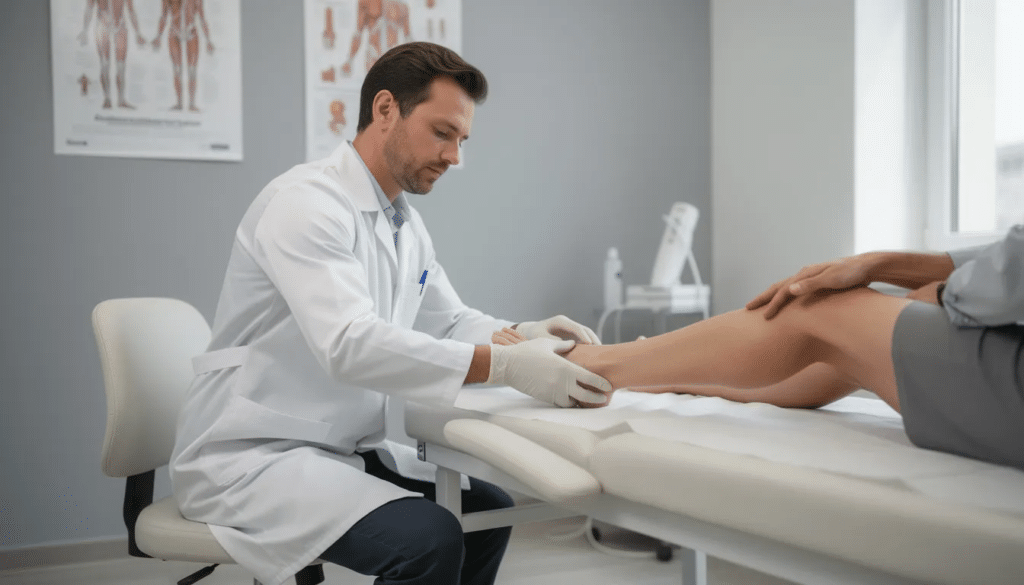
At German Medical Center in Dubai, our orthopedic and sports medicine specialists assess the extent of the damage through physical examination and imaging when needed. From there, treatment may include:
- Structured physiotherapy
- Targeted strengthening programs
- Shockwave therapy
- Bracing or immobilization
- Surgical repair in severe cases
The goal isn’t just pain relief. It’s restoring full function and preventing future injury.
Who Is at Higher Risk?
Achilles injuries aren’t limited to professional athletes.
We frequently see:
- Weekend runners increasing mileage too quickly
- Individuals returning to exercise after long breaks
- People with tight calf muscles
- Adults over 30 engaging in high-impact sports
Even certain medications and underlying medical conditions can increase the risk of Achilles tendon rupture.
If you’ve recently changed your activity level and notice any of the warning signs above, don’t dismiss them.
When Should You See a Doctor?
If you experience sudden severe pain, hear a pop, or can’t bear weight, seek immediate care.
For persistent Achilles tendon pain, swelling, or stiffness lasting more than a few days, schedule an evaluation. Early intervention often means simpler treatment and faster recovery.
Tendon injuries don’t usually fix themselves. They tend to get worse quietly, until one day they don’t feel quiet at all.
If something feels off at the back of your ankle, listen to it. That small discomfort may be your first sign of an Achilles tendon injury. Getting it checked now could prevent months of recovery later.