

Hip pain can make getting out of the car, climbing stairs or turning in bed surprisingly difficult. Two possible causes are a hip labral tear and hip bursitis. They affect different tissues and often create different patterns of pain.
If you are trying to understand a hip labral tear vs hip bursitis, the location offers a useful clue. Deep groin pain is more suggestive of a labral problem. Pain over the bony point outside the hip is more typical of bursitis. That distinction is not a diagnosis. Tendon injuries, arthritis and pain referred from the lower back can overlap, so persistent pain deserves proper assessment.
First, where is the pain coming from?
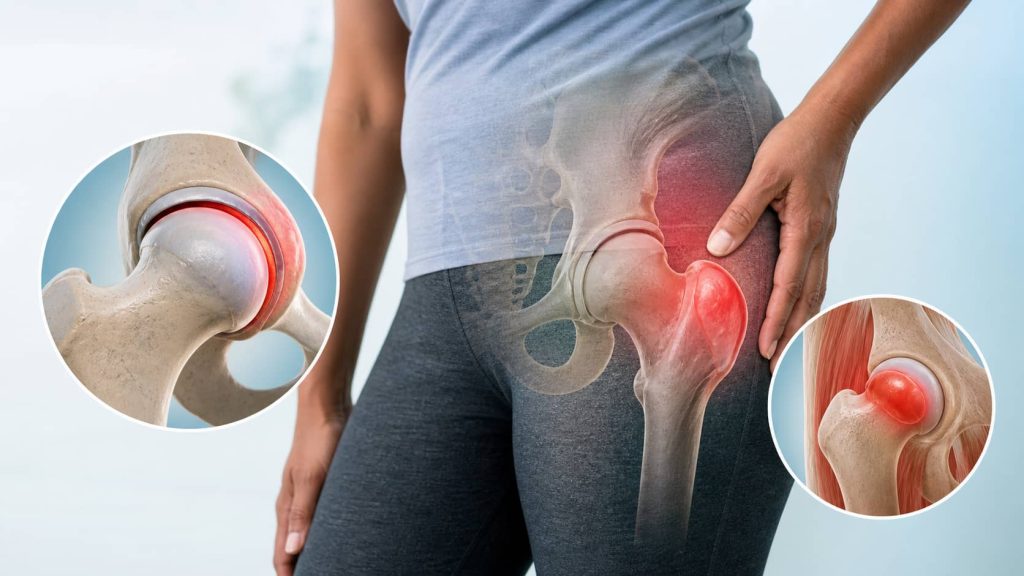
The hip is a ball-and-socket joint. The ball at the top of the thigh bone fits into a pelvic socket. A cartilage ring called the labrum runs around the socket’s rim, deepening and stabilising the joint.
Bursae sit outside the joint. These small, fluid-filled sacs reduce friction where tendons and muscles move over bone. The bursa most often associated with lateral hip pain lies near the greater trochanter, the prominent bone at the outside of the upper thigh.
One useful way to picture the difference is this: a labral tear is an inside-the-joint problem, while hip bursitis affects tissue on the outside. In practice, lateral hip pain is often grouped under the term greater trochanteric pain syndrome because the nearby gluteal tendons may also be irritated. More than one structure can be involved at the same time.
What is a hip labral tear?
A hip labral tear occurs when part of the cartilage rim around the socket is damaged. It may follow a sudden twist, collision or fall, but many tears develop gradually. Repeated pivoting and deep hip flexion can place stress on the labrum, particularly in sports such as football, tennis, dance or martial arts.
Hip shape can matter as well. Femoroacetabular impingement, or FAI, occurs when extra bone or an altered joint shape causes abnormal contact during movement. Over time, that contact may damage the labrum. Hip dysplasia and age-related changes can also contribute.
Common hip labral tear symptoms include:
- Deep pain in the groin or front of the hip
- Pain during squatting, pivoting or prolonged sitting
- Clicking, catching or a locking sensation inside the joint
- Stiffness or reduced range of movement
- A feeling that the hip is unsteady
Not every labral tear causes pain. Changes can appear on a scan in people who have no symptoms, which is why imaging findings must be matched with the patient’s history and examination.
What is hip bursitis?
Hip bursitis describes irritation of a bursa, usually over the greater trochanter. The pain is generally felt on the outside of the hip rather than deep in the groin. It may begin after an abrupt increase in walking or running, repeated stair climbing, a direct fall onto the hip or long periods spent lying on one side. Weakness or poor control in the muscles around the pelvis can increase strain on the area.
Typical hip bursitis symptoms include:
- Aching or burning pain at the outer hip
- Tenderness when pressing the bony point at the side of the hip
- Pain when lying on the affected side
- Discomfort when walking uphill, climbing stairs or standing from a low chair
- Pain that may spread down the outside of the thigh, usually not below the knee
The word “bursitis” is familiar, but the bursa is not always acting alone. Gluteal tendinopathy is a frequent part of greater trochanteric pain syndrome. This matters because a long-term recovery plan often needs progressive strengthening, not simply rest.
Hip labral tear vs hip bursitis: the telling differences
The clearest difference is usually where the pain lives. Labral pain tends to sit deep in the groin, although it can sometimes be felt in the buttock or side of the hip. Bursitis is characteristically lateral and tender to touch.
The triggers also differ. Sitting in a low seat, twisting, pivoting and bringing the knee towards the chest may aggravate a labral tear. With bursitis, direct pressure from sleeping on that side is a classic complaint. Single-leg loading, long walks and stairs may also make lateral pain worse.
Mechanical sensations provide another clue. Catching or locking points more towards an issue inside the joint, including a labral tear. Bursitis more often produces a steady ache without true locking. These patterns are useful, but they are not absolute. Some patients have both conditions, and other hip pain causes can imitate either one.
How is the cause of hip pain diagnosed?
An assessment begins with the story behind the pain. A clinician will ask when it started, where it is felt, which movements provoke it and whether there was an injury. The examination may include walking, balance, hip strength, range of motion and carefully selected movements that load the joint, bursa or nearby tendons.
Imaging is chosen according to the findings. An X-ray can show arthritis, bone shape and some structural causes of impingement, although it does not show the labrum clearly. MRI may be used to examine the labrum and other soft tissues. In selected cases, contrast placed into the joint before MRI can provide additional detail. Ultrasound can help assess the bursa and gluteal tendons and may guide an injection when appropriate.
A scan should answer a clinical question, not replace the examination. Accurate hip pain treatment in Dubai connects imaging results to symptoms rather than treating an incidental finding.
Treatment for a hip labral tear
Treatment depends on the cause, the severity of symptoms and the patient’s goals. Many people begin with non-surgical care. This may include temporarily reducing painful pivoting or deep-flexion activities, followed by physiotherapy at German Medical Center to improve hip and trunk strength, movement control and joint tolerance.
Pain-relieving or anti-inflammatory medicine may be considered if it is safe for the individual. It should be discussed with a clinician, especially when other medical conditions or medicines are involved.
An image-guided injection may sometimes help clarify whether pain is coming from inside the joint and provide temporary relief. If significant pain or mechanical symptoms continue despite a well-planned rehabilitation programme, an orthopaedic surgeon may discuss hip arthroscopy.
Surgery is not based on the scan alone. The joint shape, cartilage health, examination findings, activity needs and response to conservative care all influence the decision.
Treatment for hip bursitis
Early treatment usually focuses on reducing compression and gradually rebuilding capacity. Try not to sleep directly on the painful side. When lying on the other side, a pillow between the knees can keep the upper leg supported. A temporary reduction in hills, long walks or repeated stairs may settle irritation, but complete inactivity is rarely the long-term answer.
Physiotherapy can address gluteal strength, pelvic control and a sensible return to activity. If pain remains limiting, a clinician may consider medication or a corticosteroid injection after reviewing the likely source and the person’s health.
An injection can reduce pain for some patients, but rehabilitation remains important because it helps correct the loading problem that may have contributed in the first place. Surgery for isolated bursitis is uncommon.
When should you seek medical advice?
Arrange an assessment if pain is persisting, returning, disturbing sleep or changing how you walk. Seek urgent care after a significant fall if you cannot bear weight, or if hip pain comes with fever, marked redness or swelling. Unexplained weight loss, severe night pain or rapidly worsening symptoms also need prompt medical review.
At German Medical Center, the Orthopedics Clinic in Dubai can assess joint, muscle and tendon-related hip pain and build a treatment plan around the diagnosis. When rehabilitation is appropriate, the Physiotherapy Department provides individual programmes designed to restore strength, mobility and confidence.
For a small group of patients with an appropriate diagnosis and ongoing symptoms, the orthopaedic team can also advise whether minimally invasive arthroscopy should be considered.
The takeaway
When comparing a hip labral tear vs hip bursitis, start with the pain pattern: deep groin pain, clicking and discomfort with twisting suggest the labrum; outer-hip tenderness and pain while lying on one side suggest the bursa or nearby gluteal tendons. Still, symptoms overlap, and self-diagnosis can delay the right treatment.
The encouraging part is that both conditions often improve with a clear diagnosis, sensible activity changes and targeted rehabilitation. If hip pain is limiting your work, exercise or sleep, book an orthopaedic assessment at German Medical Center in Dubai. Understanding what is actually irritated is the first step towards moving comfortably again.
This article is for general education and does not replace an individual medical consultation.