

In short: The PSA blood test measures a protein made by prostate cells. A raised result can occur with prostate cancer, but also with benign enlargement, inflammation and other non-cancer causes. A low result cannot exclude every cancer. Interpretation depends on age, risk factors, previous results, examination and whether further testing is appropriate.
Key takeaways
- PSA is prostate-specific but not cancer-specific.
- A single abnormal result often needs context or confirmation.
- Potential benefits and harms should be discussed before screening.
- MRI, risk calculators and biopsy may be considered after clinical review.
What PSA measures
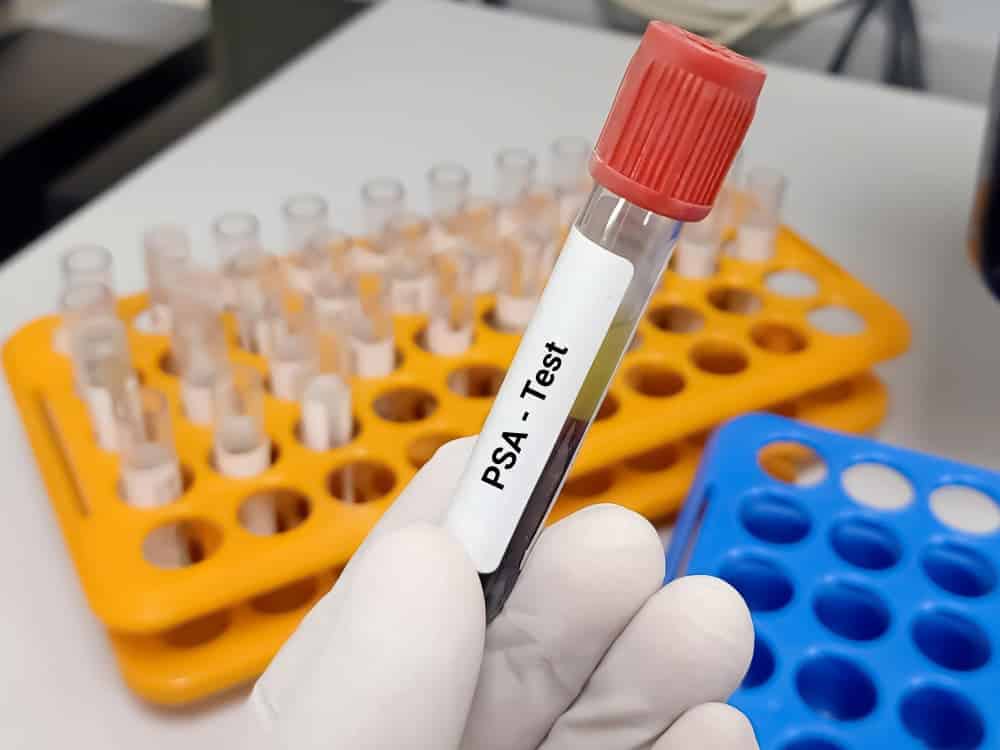
Prostate-specific antigen is a protein produced by prostate epithelial cells. A small amount normally circulates in the blood. The test reports a concentration, but no single result can by itself prove or exclude prostate cancer.
PSA is used in early-detection discussions, in the investigation of prostate concerns and in monitoring after a prostate-cancer diagnosis or treatment. The meaning is different in each context.
Why PSA can be raised without cancer
- benign prostatic hyperplasia
- prostate inflammation or urinary infection
- recent instrumentation involving the prostate or urinary tract
- individual variation and increasing prostate volume
- some activities or clinical circumstances close to the test
Medicines that shrink the prostate can lower PSA and change interpretation. Tell the clinician about prescriptions, supplements, recent infection and prior prostate procedures. Do not stop medicine simply to prepare for a test unless instructed.
Why screening is a personal decision
PSA testing may help find clinically significant cancer before symptoms appear, but it can also lead to anxiety, repeat tests and biopsies when cancer is absent. It may identify a slow-growing cancer that would never have caused harm, creating the possibility of overdiagnosis and treatment side effects.
Age, family history, ancestry, inherited risk, overall health and personal preferences should shape the discussion. Screening recommendations differ between organisations and countries, so the decision should not be based on a generic age rule copied from another health system.
What happens after a raised result
- Confirm the clinical context. The urologist reviews symptoms, infection, medicines, family history and previous results.
- Consider repeat testing. A repeat sample may be appropriate when a temporary cause is possible.
- Refine the risk assessment. Examination, PSA density, additional blood or urine markers, or a validated risk calculator may be used in selected cases.
- Use imaging when appropriate. Multiparametric MRI can help identify suspicious areas and guide biopsy decisions.
- Discuss biopsy. Tissue sampling is the test that can confirm cancer, but it has limitations and risks that should be explained.
Questions to ask about your result
- Is this result abnormal for my situation and laboratory?
- Could infection, BPH or medicine affect it?
- Should the test be repeated and under what conditions?
- Would MRI or another risk assessment add useful information?
- What are the benefits and risks of biopsy in my case?
Symptoms still deserve assessment
PSA screening and symptom evaluation are different. Blood in urine, urinary retention, fever with urinary symptoms, persistent bone pain or unexplained weight loss should be assessed rather than waiting for a routine screening test.
Care at German Medical Center
German Medical Center’s Urology and Andrology departments provide prostate assessment, including prostate-cancer evaluation and management. A urologist can discuss whether PSA testing is appropriate and interpret the result alongside the patient’s clinical history.
You can also review Urology Clinic and Andrology Clinic for relevant service and related-care information.
To discuss your symptoms or test results, Contact German Medical Center to request an appointment with the relevant department in Dubai Healthcare City. The clinician will determine whether further testing or treatment is appropriate for you.
Frequently asked questions
Does high PSA mean cancer?
No. PSA may rise because of BPH, inflammation or other non-cancer causes. A raised result signals the need for clinical interpretation, not a cancer diagnosis.
Can prostate cancer occur with a low PSA?
Yes. PSA is not perfectly sensitive, and some clinically significant cancers occur at lower values. Symptoms, examination and individual risk still matter.
Should I avoid cycling or sex before a PSA test?
Temporary factors may influence PSA in some circumstances. Ask the testing clinician for preparation instructions rather than relying on a universal rule. Report recent urinary infection or prostate procedures.
Will I need a biopsy after a high PSA?
Not automatically. Repeat PSA, examination, MRI and other risk tools may be considered first. Biopsy decisions depend on the estimated chance of clinically significant cancer and personal preferences.
How often should PSA be repeated?
There is no interval that fits everyone. It depends on age, baseline PSA, risk factors, health, previous results and the purpose of testing. Agree on a follow-up plan with your clinician.
Medical disclaimer
This article provides general health information and does not replace an individual consultation, diagnosis or treatment plan. Symptoms can have several causes. Seek urgent medical care for severe, sudden or rapidly worsening symptoms.