

Chronic Back or Neck Pain? When Spinal Disc Replacement Becomes the Right Solution
Living with chronic back or neck pain can quietly take over your life. Simple activities such as sitting, driving, or sleeping become uncomfortable, and over time the pain begins to affect productivity, mood, and overall quality of life. While many spine-related conditions respond well to physiotherapy, medication, or lifestyle changes, there are cases where these measures are no longer enough. In such situations, spinal disc replacement may become a highly effective and long-term solution.
At German Medical Center, advanced spine care focuses on identifying the root cause of chronic pain and offering evidence-based treatments that restore function while preserving natural movement.
Understanding Chronic Back and Neck Pain
The spine is made up of vertebrae separated by intervertebral discs. These discs act as shock absorbers and allow flexibility. Over time, or due to injury, discs can degenerate, herniate, or collapse. When this happens, nearby nerves may become compressed, leading to persistent pain, numbness, tingling, or weakness in the arms or legs.
Chronic pain is typically defined as pain lasting longer than three months despite conservative treatment. Common causes include:
- Degenerative disc disease
- Herniated or bulging discs
- Postural stress and repetitive strain
- Previous spine injuries
- Age-related wear and tear
When disc damage progresses, it can severely limit movement and daily function.
When Conservative Treatments Are No Longer Enough
Most patients with back or neck pain improve with non-surgical care. This may include physiotherapy, pain management injections, posture correction, and activity modification. However, surgery may be considered when:
- Pain persists for months despite treatment
- Symptoms worsen or become disabling
- Nerve compression causes weakness or loss of coordination
- Imaging confirms disc degeneration as the pain source
In the past, spinal fusion was often the primary surgical option. While effective in stabilizing the spine, fusion limits motion at the treated level and may increase stress on surrounding discs. This is where spinal disc replacement surgery offers a modern alternative.
What Is Spinal Disc Replacement?
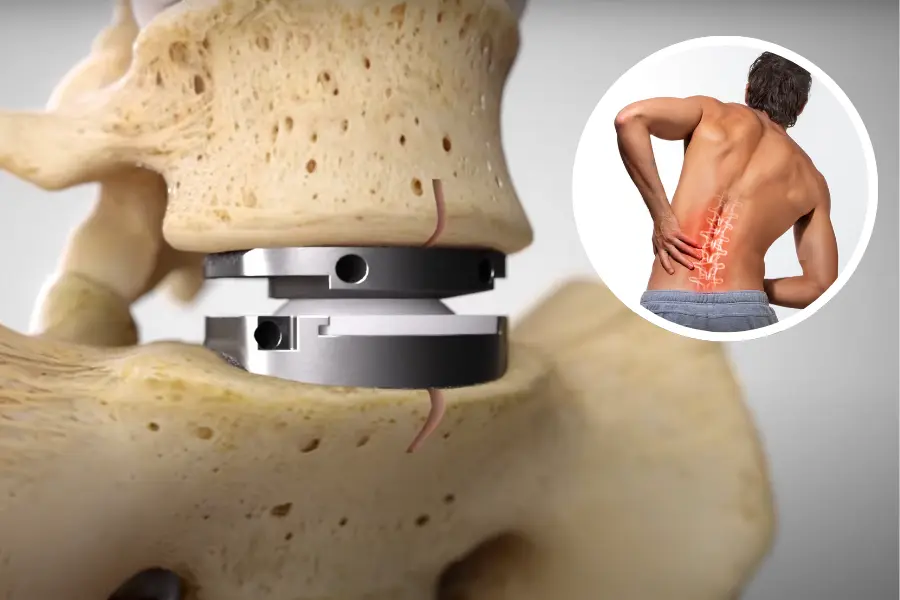
Spinal disc replacement is a procedure in which a damaged disc is removed and replaced with an artificial disc designed to mimic natural movement. Unlike fusion, this approach aims to preserve flexibility while relieving nerve pressure and pain.
The procedure is commonly performed in two areas:
- Cervical disc replacement for the neck
- Lumbar disc replacement for the lower back
Artificial discs are made from durable, biocompatible materials and are engineered to allow controlled motion similar to a healthy disc.
Who Is a Good Candidate for Disc Replacement?
Not every patient with spine pain is suitable for disc replacement. Ideal candidates typically:
- Have pain originating from one or two damaged discs
- Do not have significant spinal instability or severe arthritis
- Are physically healthy enough for surgery
- Have symptoms confirmed by MRI or CT imaging
A detailed assessment by spine specialists is essential to determine whether disc replacement or another treatment is most appropriate.
Benefits of Spinal Disc Replacement
For selected patients, disc replacement offers several advantages:
- Preserves natural spine movement
- Reduces stress on adjacent spinal levels
- Faster return to daily activities compared to fusion
- Long-term pain relief and improved mobility
By maintaining motion, patients often experience a more natural recovery and improved functional outcomes.
Recovery and Long-Term Outlook
Recovery after spinal disc replacement surgery varies depending on the treated area and individual health. Most patients begin gentle movement soon after surgery and follow a structured rehabilitation plan. Many return to light activities within weeks, with continued improvement over several months.
Long-term studies show that disc replacement can provide lasting pain relief and high patient satisfaction when performed for the right indications.
When to Seek Specialist Advice
If chronic back or neck pain is affecting your quality of life, it is important not to ignore it. Early evaluation helps prevent further nerve damage and opens the door to advanced treatment options. At German Medical Center, comprehensive spine assessments focus on accurate diagnosis, personalized treatment planning, and the most advanced surgical and non-surgical solutions available.