

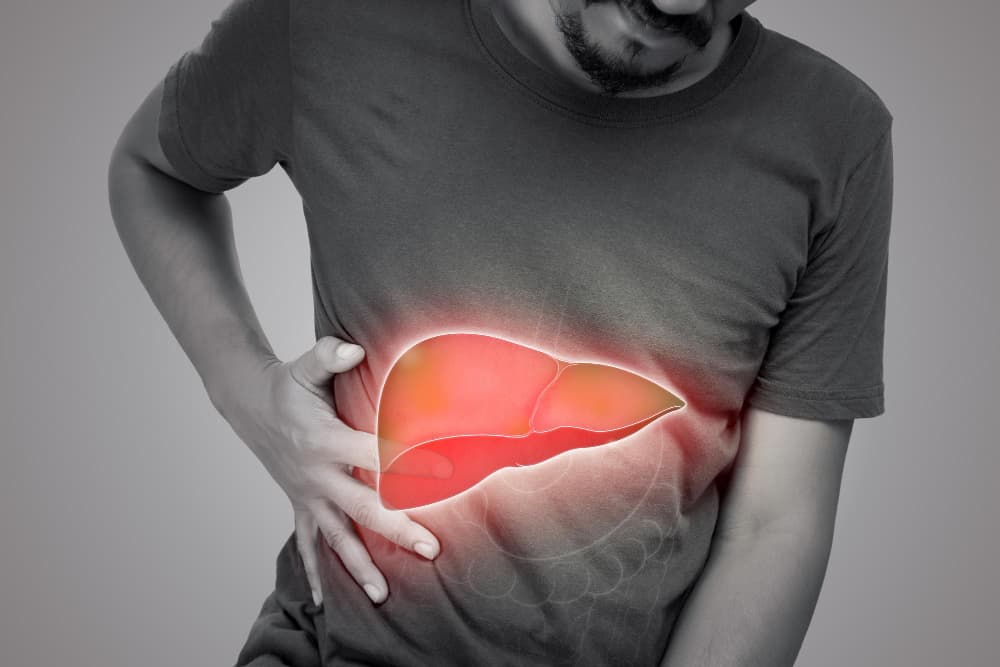
In short: Fatty liver, now often called metabolic dysfunction-associated steatotic liver disease, may be present without symptoms or marked liver-test abnormalities. The main concern is whether scarring, or fibrosis, is developing. Elastography estimates liver stiffness non-invasively and may be used after clinical and blood-test risk assessment, particularly in people with metabolic risk factors.
Key takeaways
- Fatty liver can be silent.
- Liver fat and liver fibrosis are related but not identical findings.
- Elastography estimates stiffness and helps assess fibrosis risk.
- A result must be interpreted with blood tests, medical history and image quality.
Why fatty liver deserves risk assessment
Fat accumulation in the liver is common in people with type 2 diabetes, excess body weight, abnormal cholesterol, high blood pressure and other metabolic risk factors. Many people feel well and learn about it after an ultrasound or blood test performed for another reason.
Not everyone develops progressive liver damage. The clinically important question is whether inflammation and fibrosis are present or likely. Advanced fibrosis increases the risk of cirrhosis and liver-related complications.
What liver elastography measures
Elastography uses ultrasound-based vibration or magnetic resonance techniques to estimate how stiff the liver is. Increased stiffness can be associated with fibrosis. The test is non-invasive and does not require a tissue sample.
Stiffness is not perfectly specific. Inflammation, congestion, recent food intake and technical factors may influence a reading. Elastography cannot by itself prove steatohepatitis, and a liver biopsy may still be considered when the diagnosis or stage remains uncertain and the result would change care.
Who may be considered for the test
- people with type 2 diabetes and suspected fatty liver
- people with several metabolic risk factors
- patients with persistently abnormal liver enzymes
- people whose ultrasound or CT shows liver fat
- patients with a blood-based fibrosis score that is not clearly low risk
- people with known chronic liver disease who need fibrosis assessment
The decision is not based on body weight alone. Alcohol intake, viral hepatitis, medicines and other liver diseases need consideration because more than one cause may be present.
How the test fits into a pathway
- Review medical and family history, alcohol exposure, medicines and metabolic risks.
- Check liver enzymes, platelets and other relevant blood tests.
- Use a validated blood-based score such as FIB-4 when appropriate.
- Consider elastography when secondary fibrosis assessment is indicated.
- Refer or investigate further when results suggest higher risk or remain discordant.
Preparing for elastography
Follow the clinic’s fasting and medication instructions because protocols vary by device. Wear clothing that allows access to the right upper abdomen and bring previous liver tests and imaging.
The operator places a probe against the skin. Measurements are repeated to assess reliability. Ask for the numerical result, the quality indicators and the interpretation rather than treating one stiffness number as a diagnosis.
What happens after the result
A low-risk result may support monitoring and metabolic risk reduction. A higher or unreliable result may lead to repeat testing, additional imaging, hepatology review or selected use of liver biopsy.
Management usually addresses the underlying drivers: weight, diabetes, lipids, blood pressure, alcohol exposure and other liver conditions. Treatment should be individualized; rapid weight-loss schemes and unverified supplements can harm the liver.
Care at German Medical Center
German Medical Center’s Gastroenterology service lists liver elastography and care for liver disease. The liver-elastography page describes non-invasive assessment of liver stiffness.
You can also review Gastroenterology Clinic, Liver Elastography service and Internal Medicine Clinic for relevant service and related-care information.
To discuss your symptoms or test results, book an appointment with the relevant German Medical Center department in Dubai Healthcare City. The clinician will determine whether further testing or treatment is appropriate for you.
Frequently asked questions
Is fatty liver always caused by alcohol?
No. Metabolic fatty liver is associated with diabetes, weight and other metabolic factors. Alcohol can also cause or worsen liver disease, and both contributors may be present.
Can normal liver enzymes rule out fibrosis?
No. Liver enzymes can be normal despite significant disease. Risk assessment uses history, blood-test patterns and sometimes imaging rather than one enzyme value.
Is elastography the same as ultrasound?
It may use ultrasound technology, but it answers a different question by estimating stiffness. A conventional ultrasound mainly shows liver appearance and may detect fat or structural change.
Does a high stiffness result mean cirrhosis?
Not automatically. Fibrosis can increase stiffness, but inflammation, congestion and technical factors also matter. A specialist should assess reliability and whether confirmation is needed.
Can fatty liver improve?
Liver fat and early disease may improve when underlying metabolic risks are addressed. The plan should be realistic, monitored and tailored to other health conditions.
Medical disclaimer
This article provides general health information and does not replace an individual consultation, diagnosis or treatment plan. Symptoms can have several causes. Seek urgent medical care for severe, sudden or rapidly worsening symptoms.