

In short: Varicose veins are often harmless, but they deserve medical assessment when they cause persistent pain, heaviness, swelling, itching, skin discoloration, a non-healing sore, hard tender veins or bleeding. Sudden one-sided swelling, chest pain or breathlessness requires urgent care because it may indicate a blood clot rather than uncomplicated varicose veins.
Key takeaways
- Visible veins alone do not always require treatment.
- Symptoms and skin changes matter more than appearance when deciding whether to seek care.
- A duplex ultrasound can assess blood flow and help plan treatment.
- Sudden swelling or breathing symptoms require urgent medical attention.
What varicose veins are
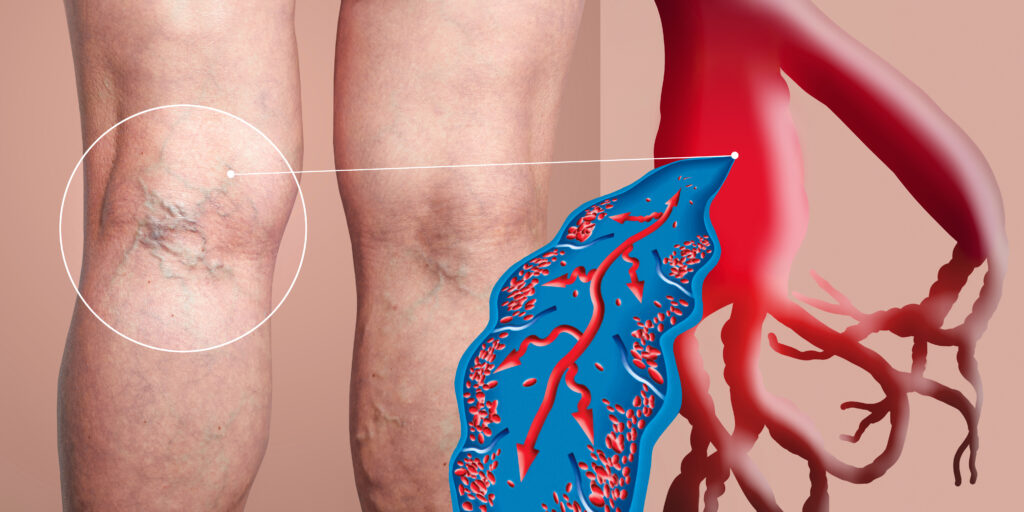
Varicose veins are enlarged, twisted veins that usually develop in the legs. They form when valves in superficial veins do not move blood upward efficiently, allowing blood to pool and increase pressure inside the vein.
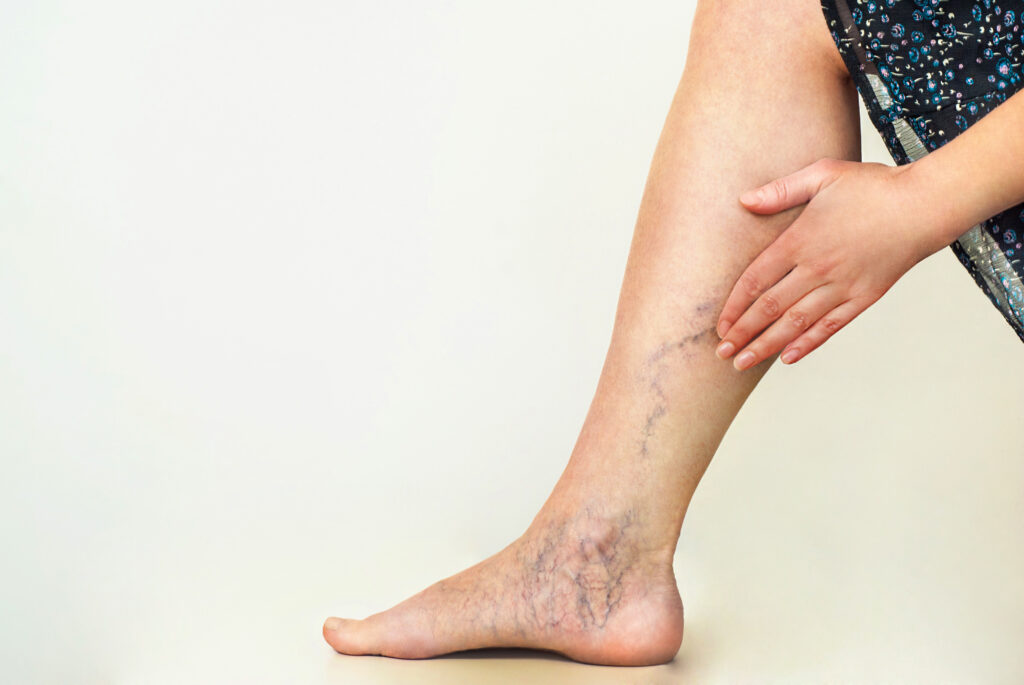
Small spider or thread veins are different. They lie closer to the skin and are often an appearance concern, although a clinician should assess any new skin change that is painful, rapidly progressing or difficult to explain.
Signs that the problem may be medical
A vascular review is reasonable when symptoms affect daily activities or when the skin around the ankle begins to change. Relevant symptoms include:
- aching, throbbing or a heavy feeling in the leg
- ankle or lower-leg swelling that becomes worse after standing
- itching, eczema-like irritation or brown discoloration near the ankle
- a hard, red or tender vein
- a wound near the ankle that heals slowly
- bleeding from a surface vein
These findings do not confirm a specific diagnosis. Leg pain and swelling can also come from arterial disease, a blood clot, lymphatic disease, joint problems or medication effects, so the examination should not start from the assumption that every symptom is caused by visible veins.
When symptoms are urgent
Seek urgent care for sudden swelling in one leg, new calf pain with warmth or redness, coughing blood, chest pain, fainting or unexplained breathlessness. These symptoms may occur with deep vein thrombosis or pulmonary embolism and should not wait for a routine vein appointment.
Active bleeding from a varicose vein also needs prompt attention. Apply firm pressure, elevate the leg if possible and obtain urgent medical help.
How a vascular specialist assesses varicose veins
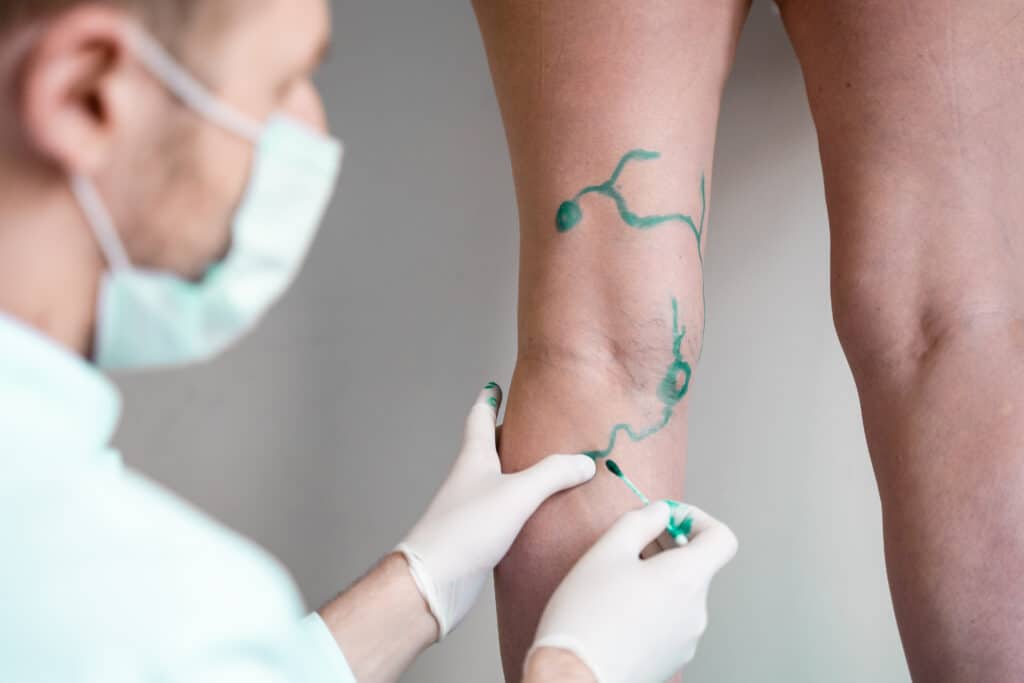
The assessment normally starts with your symptoms, previous blood clots, pregnancy history, medicines, occupation and how the problem affects activity. The clinician examines both legs while looking for swelling, skin changes and ulceration.
Duplex ultrasound combines standard ultrasound with blood-flow assessment. It can identify venous reflux, check which veins are involved and help distinguish a surface-vein problem from other causes. The result guides whether observation, compression or a procedure is reasonable.
Treatment depends on symptoms and vein anatomy
Not every person with varicose veins needs a procedure. Walking, avoiding long periods of immobility, weight management where appropriate and elevating the legs may reduce symptoms. Compression stockings may help selected people, but the correct strength and suitability should be checked, especially when arterial circulation may be reduced.
For confirmed truncal reflux, options can include endothermal ablation, ultrasound-guided foam sclerotherapy or surgery. The preferred approach depends on ultrasound findings, the vein involved, other medical conditions, pregnancy status, previous treatment and personal priorities.
Questions to ask at your consultation
- Are my symptoms likely to come from the veins or another condition?
- Do I need a duplex ultrasound?
- What happens if I monitor the veins without a procedure?
- Which treatment fits my vein anatomy and why?
- What recovery restrictions and recurrence risks should I expect?
Care at German Medical Center
German Medical Center lists vascular assessment and treatment for varicose veins, peripheral artery disease, deep vein thrombosis, aneurysms and vascular malformations. Its vascular service page also describes minimally invasive and surgical techniques.
You can also review Vascular Surgery Department and Health articles for relevant service and related-care information.
To discuss your symptoms or test results, use the German Medical Center contact page to request an appointment with the relevant department in Dubai Healthcare City. The clinician will determine whether further testing or treatment is appropriate for you.
Frequently asked questions
Can varicose veins be dangerous?
Most are not dangerous. Complications can include bleeding, inflammation of a superficial vein, skin damage and venous ulcers. Sudden one-sided swelling or breathlessness is not typical of uncomplicated varicose veins and needs urgent assessment.
Do all visible veins need treatment?
No. Treatment is usually considered when symptoms, complications or personal concerns justify it. A vascular assessment helps determine whether a visible vein is connected to deeper reflux and whether observation is reasonable.
Can exercise make varicose veins worse?
Regular walking generally supports calf-muscle pumping and circulation. Symptoms may feel worse after prolonged standing, but ordinary exercise is not usually the cause. Ask your clinician about restrictions after a procedure or if exercise triggers marked pain.
Will varicose veins return after treatment?
Treatment can close or remove targeted veins, but it cannot remove the underlying tendency to develop venous disease. New veins or recurrent reflux may appear later. Follow-up and symptom management remain important.
Can varicose veins be treated during pregnancy?
Procedures are commonly deferred during pregnancy because veins may improve after delivery. Compression may be considered for symptoms after professional fitting. Sudden swelling or pain in pregnancy requires urgent medical advice.
Medical disclaimer
This article provides general health information and does not replace an individual consultation, diagnosis or treatment plan. Symptoms can have several causes. Seek urgent medical care for severe, sudden or rapidly worsening symptoms.