

If you have ever woken in the night with a big toe that feels hot, swollen and painfully sensitive to the lightest touch, you will understand why gout deserves more than a list of foods to avoid. The pain may arrive suddenly, but the conditions behind it often develop quietly. High uric acid and gout are linked, yet they are not the same thing, and managing them well usually requires a mix of medical assessment and realistic daily habits.
From a naturopathic perspective, food, hydration, sleep, movement and metabolic health all matter. They can help reduce avoidable triggers and support the way the kidneys handle uric acid. They cannot, however, dissolve every crystal or replace prescribed treatment. The sensible goal is not a punishing “detox.” It is a steady plan you can live with.
What is the connection between high uric acid and gout?
Uric acid is produced when the body breaks down purines, natural compounds found in our cells and in many foods. Most uric acid dissolves in the blood, passes through the kidneys and leaves in urine. When the body makes too much or the kidneys remove too little, the level rises. This is called hyperuricaemia.
Over time, excess urate can form needle-shaped crystals in and around a joint. The immune system reacts to those crystals, causing the intense inflammation of a gout flare. The big toe is the classic site, although ankles, knees, wrists, fingers and elbows can also be affected.
One important detail is often missed: a high blood result does not automatically mean gout. Many people with elevated uric acid never develop symptoms. Diagnosis may involve your history, an examination, blood tests, imaging or analysis of fluid from the affected joint. Sudden severe joint pain with fever needs prompt assessment because an infection can look similar.
Who is more likely to develop gout?
Diet is only one piece of the picture. Genes, age and kidney function may have a stronger influence than one meal. Risk also rises with excess body weight, high blood pressure, insulin resistance, diabetes, metabolic syndrome and chronic kidney disease. Some medicines, including certain diuretics and low-dose aspirin, may raise uric acid.
Do not stop a prescribed medicine on your own. A clinician can review whether it is still appropriate and, when necessary, consider alternatives. People with kidney stones should also mention them, as uric acid can affect both joints and the urinary system.
A practical gout diet plan: what to limit
A useful gout diet plan is less about banning entire food groups and more about reducing the items most likely to push uric acid upward.
Start with organ meats such as liver, kidney and sweetbreads. They are particularly rich in purines. Keep portions of red meat and processed meat modest, rather than building every lunch and dinner around them. Certain seafoods—including anchovies, sardines, mussels, scallops and some shellfish—also deserve caution, especially if you notice a consistent link with flares.
Alcohol can increase uric acid production and make it harder for the kidneys to remove it. Beer and spirits are frequent triggers, but no alcoholic drink is completely neutral. During a flare, avoiding alcohol is the safer choice. Between flares, discuss a suitable limit with your clinician.
Sugary drinks are another common blind spot. Soft drinks, energy drinks and large quantities of juice can deliver concentrated fructose. Whole fruit comes with fibre and is generally a better choice.
Foods to lower uric acid: build the plate before cutting foods out
No single ingredient acts as a cure, but a balanced eating pattern can support healthier urate levels and weight. When people search for foods to lower uric acid, the most useful answer is usually a combination rather than a miracle food.
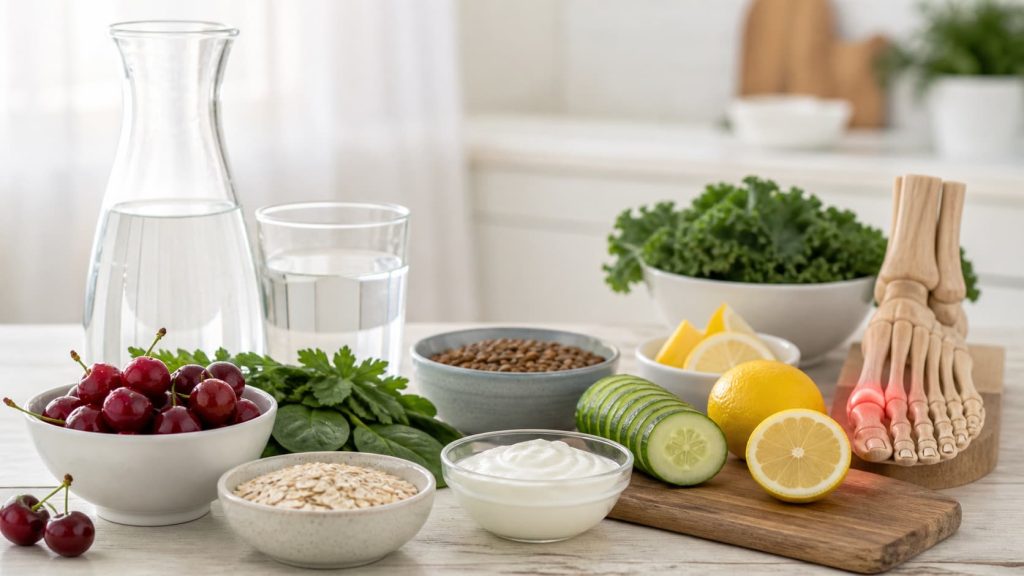
Fill roughly half the plate with varied vegetables. Add a moderate portion of whole grains or another high-fibre carbohydrate, then choose a sensible protein serving. Eggs, low-fat milk or yoghurt, tofu, and moderate portions of poultry can provide alternatives to large servings of red meat. Beans and lentils contain purines, but plant purines do not appear to carry the same gout risk as organ meat and certain seafoods for most people. Portion and individual tolerance still matter.
Low-fat dairy may be helpful as part of a balanced diet. Cherries and vitamin-C-rich foods are also being studied and may offer modest support, but the evidence does not justify large servings of sweetened cherry juice or high-dose supplements. Supplements can interact with medicines and may be unsuitable for some kidney conditions, so check before taking them.
A DASH-style pattern—vegetables, whole fruit, whole grains, low-fat dairy, nuts and minimally processed foods—is a reasonable foundation. It also supports blood pressure and metabolic health.
Hydration helps, but more is not always better
Water supports normal kidney function and reduces the chance of becoming dehydrated, a potential flare trigger. Dubai’s heat, outdoor exercise, travel and long hours in air-conditioning can make fluid habits easy to overlook. Keep water visible, drink regularly through the day and take extra care when you are sweating.
There is no universal litre target that suits everyone. Your needs vary with body size, weather, activity, pregnancy, diet and health conditions. Pale-yellow urine is a practical day-to-day guide for many adults, although medicines and supplements can change its colour. If you have kidney disease, heart failure or have been told to restrict fluids, ask your doctor for a personal target. Forcing excessive water can be unsafe and will not “flush out” gout overnight.
Plain water is the simplest option. Unsweetened tea or water flavoured with cucumber or citrus can add variety. Replacing a daily soft drink with water is more useful than chasing an elaborate cleanse.
How to reduce uric acid naturally without extreme measures
If weight loss is appropriate, aim for gradual progress. Crash diets, prolonged fasting and rapid weight loss can temporarily raise uric acid and provoke a flare. A sustainable calorie reduction, regular meals and steady physical activity are kinder to the body.
Move consistently when joints are comfortable. Walking, swimming, cycling and resistance training can support weight, insulin sensitivity and cardiovascular health. During a painful flare, rest and protect the affected joint; return to activity gradually once symptoms settle.
Sleep and stress influence appetite, recovery and the routines that make healthy choices possible. A personalized naturopathic consultation can offer structured help with meals, hydration, sleep and achievable behaviour change—not a promise to cure gout.
Keep a simple two-to-four-week record of meals, drinks, water, medicines and symptoms. Patterns are more informative than blaming the last food you ate. They also give your clinician something concrete to review.
What to do during a gout flare
Rest the joint, elevate it if practical and use a wrapped cold pack for short periods. Contact a healthcare professional early because anti-inflammatory treatment works best when started promptly and must be chosen around your kidney health, stomach history and other medicines. Do not begin, stop or change allopurinol or another urate-lowering medicine without medical advice.
Seek urgent care for a first episode of severe joint swelling, fever, chills, broken skin near the joint, rapidly worsening redness, or pain that feels different from previous flares. These signs need proper evaluation, not home treatment alone.
When lifestyle support is not enough
For recurrent flares, tophi, joint damage, kidney stones or certain kidney conditions, long-term urate-lowering medicine may be recommended. Clinical guidelines commonly use a treat-to-target approach, often aiming for serum urate below 6 mg/dL in people receiving this therapy. Your target and medication plan must be individualized. Diet can support treatment, but it rarely lowers uric acid enough on its own when gout is established.
At German Medical Center, you can begin with the Internal Medicine Clinic for assessment, laboratory testing and medication review. The Naturopathy Clinic in Dubai can complement medical care with personalized nutrition and lifestyle guidance.
If kidney stones or urinary symptoms are part of the picture, the Urology Clinic is a relevant next step. Metabolic concerns such as obesity, insulin resistance or diabetes may also benefit from Endocrinology care.
A calmer, safer way forward
Managing high uric acid and gout is not about eating perfectly. It is about knowing your numbers, understanding your personal risks and making repeatable choices: more water instead of sweetened drinks, smaller portions of high-purine animal foods, gradual weight management and timely medical follow-up.
If you are looking for gout treatment in Dubai, bring your latest blood results, medication list and symptom notes to your appointment. A coordinated plan can address the pain you feel today while reducing the risk of future flares, kidney stones and joint damage.
Book an appointment with German Medical Center to discuss a plan suited to your health history.
This article is for general education and does not replace individual medical advice, diagnosis or treatment.