


Medically reviewed by Prof. Gerald Zimmermann, Orthopaedics, German Medical Center.
Knee osteoarthritis treatment is guided by pain, function, examination and your goals, not an X-ray stage alone. Exercise-based care remains important across stages, while injections and surgery have different roles and levels of evidence. No injection should be presented as a guaranteed way to regrow cartilage or avoid a knee replacement. NHS osteoarthritis treatment guidance
What does “stage” tell you?
Imaging can show structural changes, but the treatment decision also needs a description of your life: how far you can walk, whether stairs are manageable, how sleep is affected and what you have already tried. Two people with similar images may have different priorities.
Use the following as a discussion framework rather than a treatment ladder that everyone must follow:
- Manageable symptoms: establish an exercise plan, review activity demands and discuss weight management if relevant.
- Persistent limitation: reassess the diagnosis and earlier treatment; discuss appropriate medicines and whether an injection has a useful role.
- Major ongoing disability: consider a surgical assessment when non-operative care is insufficient or unsuitable.
There is no requirement to try every marketed injection before discussing surgery.
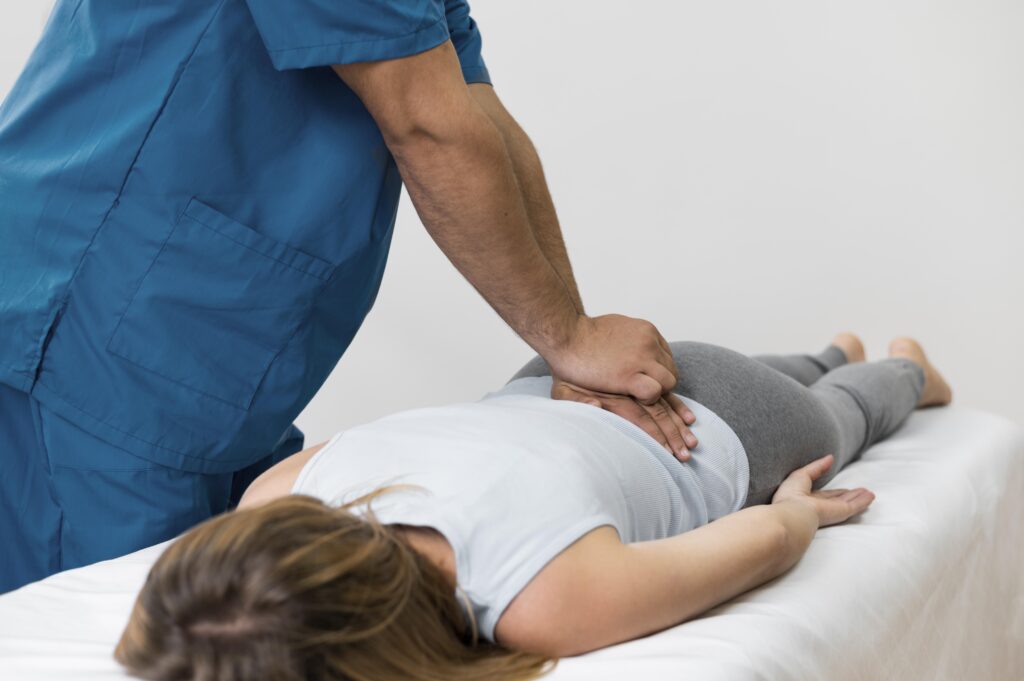
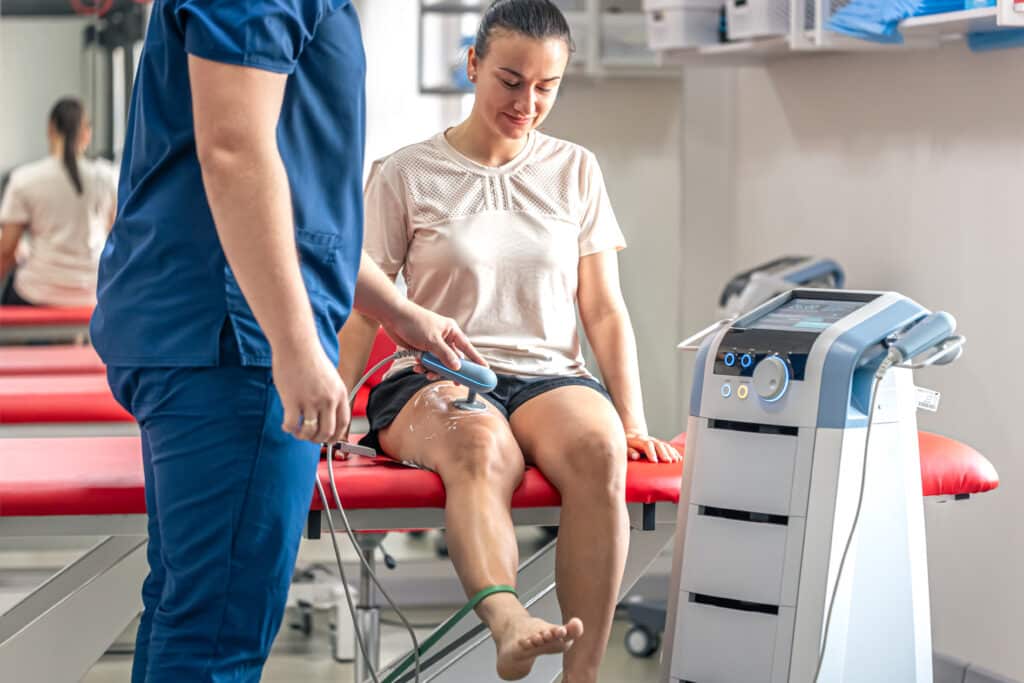
Physiotherapy: the foundation of care
A tailored programme can build strength, maintain movement and help you pace activity. Exercise may need adjustment during a flare rather than complete abandonment. Weight management, where relevant, and suitable pain-relieving treatment can support movement. Medicines need individual consideration because health conditions and other prescriptions affect safety. NHS guidance
Ask for a programme you can realistically follow and a way to judge progress. “Walk more” is less useful than agreeing on an achievable activity target and what to do when symptoms increase.
PRP: possible symptom relief, with uncertainty
Platelet-rich plasma is prepared from a person’s blood. It is intended to influence the local environment in the joint, but preparation methods and treatment schedules vary. Evidence and recommendations are not uniform. Ask about the specific evidence for the proposed preparation, the likelihood and duration of symptom benefit, and whether the expense is covered.
PRP should not be described as a proven cartilage-rebuilding treatment. The American Academy of Physical Medicine and Rehabilitation’s PRP guidance provides a framework for discussing selection and uncertainty.
Orthokine: different from PRP
Orthokine is a trade name associated with autologous conditioned serum, a blood-derived preparation. It is not the same as PRP. A 2024 systematic review of randomised trials found conflicting results and insufficient evidence to support its use in osteoarthritis; comparisons specifically against saline did not show a significant advantage for the analysed pain and function outcomes at six months. Curtis and colleagues, 2024
A plausible biological mechanism or an encouraging testimonial does not resolve that uncertainty. Ask how the clinician explains the evidence, which outcome is expected and what the alternatives cost.
Stem-cell treatments: distinguish research from routine care
Products described as “stem cells” are not one standardised treatment. The source, preparation, regulatory status and supporting evidence can differ. The AAOS patient guide highlights uncertainty about effectiveness and the need to understand risks and regulatory status.
Do not assume that “from your own body” means risk-free. Ask exactly what is being injected and whether claims about cartilage restoration are supported by reliable clinical evidence for that product. US regulatory information does not establish approval or availability in the UAE.
When does knee replacement become reasonable?
Replacement may be considered when symptoms substantially affect daily life and appropriate non-operative measures have not provided sufficient relief. It is a major procedure requiring discussion of surgical risks, rehabilitation and expected function. The decision is personal and should not be delayed indefinitely just to exhaust unproven options. NHS guidance
Bring three goals to the consultation, such as sleeping comfortably, walking to work or climbing stairs. Ask which option is most likely to help those goals and how success will be measured.
Confirm the type of arthritis before comparing treatments
Osteoarthritis is only one cause of a painful knee. Other forms of arthritis and injuries can require different care. The AAOS knee arthritis guide describes the role of history, examination and imaging in understanding the problem. A treatment comparison is useful only after the clinician has established what is being treated.
Describe the onset, location and pattern of pain. Explain whether there was an injury, whether swelling occurs, and what movements are difficult. Bring previous images and reports, but do not assume that an old scan answers a new change in symptoms. The clinician can decide whether the earlier findings still explain the current problem.
Ask what the diagnosis means for the plan. If you are told that a scan shows arthritis, the next question is how that finding relates to your symptoms and function. You should not have to choose between accepting every imaging finding as the cause of pain and dismissing imaging entirely. The examination and your experience give the result context.
Use stages as a framework, not a shopping list
A stage-based approach can help organise a discussion, but it should not create a rule that mild disease requires one injection and severe disease requires another. The important decision is whether the proposed treatment has a reasonable chance of improving the outcome you care about, with acceptable risks and burdens.
For early or manageable symptoms, ask what a complete non-operative programme would involve before deciding it has failed. For persistent symptoms, review whether the programme was suitable and practical. For substantial disability, ask whether a surgical opinion would help even if you are not ready to proceed. An opinion is an opportunity to understand options, not a commitment to an operation.
A treatment ladder should also allow reassessment. If the symptom pattern changes, the response should not automatically be “move to the next injection”. The clinician may need to reconsider the diagnosis, review other health issues or adjust the rehabilitation plan. Progress is judged by function and comfort, not by how many products have been tried.
What a meaningful physiotherapy programme includes
Ask the physiotherapist to explain the purpose of each exercise and how it relates to your activities. A home programme is more useful when you know how often to do it, what level of discomfort is acceptable and when to ask for review. Avoid copying a demanding routine simply because someone with knee pain recommended it online.
The programme should fit your starting point. Someone who struggles to stand from a chair and someone returning to sport need different goals. Tell the therapist about work demands, access to equipment and any barriers to attending sessions. A plan that can be followed consistently is more useful than an ambitious schedule that is abandoned after a week.
Agree on progress measures such as walking tolerance, stair use or confidence getting up from a chair. If there is little improvement, discuss whether the exercises, diagnosis or wider treatment plan need adjustment. This provides a more informative review than judging physiotherapy solely by whether the knee felt different immediately after a session.
Compare injections by evidence and purpose
An injection can be aimed at symptom relief without changing the underlying structure of the joint. Ask the clinician to state the intended outcome explicitly. “May reduce pain for a period” is a different claim from “repairs cartilage”, and the evidence needed to support those claims is different.
PRP is prepared by processing blood to concentrate platelets, but the contents and protocols can vary. The AAOS PRP guide discusses these differences and the variation in evidence across conditions. A study of one preparation or one group of patients does not automatically validate every commercial package.
Before agreeing, ask which preparation is used, how many injections are proposed, what follow-up is included and what would count as a worthwhile response. Discuss alternatives and what happens if the benefit is small or short-lived. These questions are particularly important when payment is out of pocket and the decision is preference-sensitive.
How to interpret claims about regenerative treatment
The word regenerative can describe an intended biological mechanism, a laboratory finding or a claim about a clinical result. These are not interchangeable. Ask whether the evidence shows a meaningful improvement in patients, a structural change in the joint or only a theoretical reason that a treatment might help.
A useful study comparison asks who participated, what the treatment was compared with and how long outcomes were followed. Improvements after an injection do not automatically establish that the injected substance caused them; comparison groups help address that question. This is why controlled evidence matters alongside clinical experience.
Be cautious if a provider relies mainly on a well-known athlete’s experience, a dramatic scan image or a promise that surgery will never be needed. Request an explanation of the uncertainty in ordinary language. A clinician should be able to discuss limitations without treating questions as a sign that you are not committed to recovery.
What changes when replacement is being considered?
A knee replacement resurfaces damaged joint areas with implant components. It is intended to improve pain and function in suitable patients, but it is not a return to an untouched natural knee. The AAOS replacement guide describes benefits, risks and the importance of realistic expectations and rehabilitation.
A surgical discussion should cover infection, blood clots, stiffness, persistent symptoms and the possibility of further surgery, as well as expected benefits. Ask how your health affects those risks and whether anything should be optimised before proceeding. The decision should include both the operation and the recovery process that follows it.
If you are uncertain, ask what continued non-operative care would look like and what would make the surgeon recommend reconsidering. You may decide to proceed, defer or seek another opinion. What matters is that the choice is informed by your current limitations and circumstances rather than by an arbitrary belief that replacement must always be delayed until a particular age.
Plan recovery around your real responsibilities
Discuss the layout of your home, stairs, transport and available help. Ask what equipment or practical support may be needed and how rehabilitation will be arranged. If you care for another person, plan support before treatment rather than assuming you can resume every responsibility immediately after discharge.
Work demands deserve a specific conversation. Driving, prolonged standing, lifting and desk work are different activities. Ask about each task rather than requesting one universal return-to-work date. If your employer can offer temporary adjustments, discuss which would be useful and what documentation may be needed.
Travel plans also belong in the pre-treatment discussion. Tell the team about upcoming flights or extended stays away from Dubai so that follow-up and safety considerations can be addressed. A treatment decision should account for access to care during recovery, not only the date of the procedure.
Use a written comparison to avoid decision overload
Create a short record with one row for each appropriate option and the same questions for all: intended benefit, evidence, main risks, recovery demands, cost and follow-up. Include continuing the current plan if the clinician considers it reasonable. This prevents a new treatment’s promotional description from dominating the comparison.
Ask which option the clinician recommends and why, but also ask what information could change that recommendation. A clear answer should connect the choice to your findings and goals. If the explanation is mostly that a treatment is newer or more advanced, request the clinical reasoning behind those labels.
You do not need to become an expert in every injection technology. You need enough information to understand the choice being offered and the uncertainty you are accepting. Keep the written comparison for follow-up so that progress can be judged against the original purpose of treatment.
Make the first review easy to compare with the starting point
Before beginning a new approach, choose two everyday tasks that matter to you, such as walking to a nearby shop or using the stairs at home. Describe the current difficulty in plain terms and review the same tasks later. Avoid changing the measure each time you assess progress.
Include the effort and support required, not just whether you completed the task. Being able to walk the same route with fewer stops may be meaningful even before the distance increases. Bring these observations to the clinician alongside any pain scores or formal assessments they request.
Common questions about choosing an option
Must I try PRP before replacement? There is no universal requirement to try every injection. Ask whether it is appropriate and likely to add useful benefit in your situation, rather than treating it as a compulsory step.
Does an X-ray described as severe mean surgery is inevitable now? Imaging contributes to the assessment, but the decision also involves symptoms, function, health and preferences. Ask how the image changes the recommendation for you.
What if I want to avoid surgery? Say so, and ask for a realistic non-operative plan with a review point. Avoiding surgery is a legitimate preference, but it should not require accepting unsupported promises about another treatment.
What if pain improves but walking does not? Report both outcomes. They may prompt different adjustments to rehabilitation or the wider plan. A single pain score does not capture everything that matters in knee care.
Planning care at German Medical Center
GMC lists orthopaedics and physiotherapy. Request an assessment to discuss a plan matched to your symptoms. The options explained here are not a statement that every treatment is available or appropriate at GMC.
Read more about PRP injections, Orthokine, stem cell therapy and total joint replacement at GMC, or see when knee osteoarthritis surgery is needed.
This article is general information and does not select a treatment for an individual knee.